

Winter Decor Trends 2026: Bringing Nature Indoors
The way we approach winter decorating is changing. Gone are the days of purely artificial holiday décor that gets packed away by January 2nd. In 2026, homeowners are embracing a year-round approach to winter aesthetics—one that celebrates the raw beauty of the season itself, not just the holidays within it.
At the heart of this shift? Biophilic design—the practice of connecting indoor spaces with the natural world. And winter, despite its reputation for barren landscapes, offers some of nature's most striking visual moments.
As a professional nature photographer who spends winter mornings capturing frost-kissed leaves and snow-covered botanicals, I've watched this trend evolve from niche interior design circles into mainstream home décor. Here's what's defining winter décor in 2026, and how you can bring these trends into your own space.
The Rise of Biophilic Winter Design
Why nature-focused décor matters now more than ever
We're living in an increasingly digital world. Remote work, screen time, and urban living have created what researchers call "nature deficit disorder"—a disconnection from the natural environment that impacts our mental health, stress levels, and overall well-being.
Biophilic design addresses this directly. Studies from the Journal of Environmental Psychology show that incorporating natural elements into indoor spaces can:
- Reduce stress by up to 37%
- Improve mood and emotional regulation
- Enhance focus and productivity
- Lower blood pressure and heart rate
Winter, specifically, challenges us. The shorter days, colder temperatures, and reduced outdoor time make this seasonal connection even more crucial. That's why authentic winter nature photography has become one of 2026's fastest-growing décor trends.
Unlike generic stock images or AI-generated art, authentic nature photography captures real moments—the actual texture of snow crystals, the true colors of frozen berries, the genuine interaction between light and ice. Your brain recognizes authenticity, and it responds accordingly.
Trend #1: Seasonal Transition Imagery
The most coveted aesthetic of 2026
Here's what's selling out faster than anything else this year: photographs and art that capture seasonal transitions—those fleeting moments when one season hasn't quite released its grip and the next is already arriving.
Think golden autumn leaves still clinging to branches, delicately covered in winter's first snow. Or late-winter scenes where ice begins melting and early spring green starts emerging.
These transitional moments resonate because they mirror our own lives. We're always in transition—between jobs, life stages, personal transformations. Seeing nature navigate its own changes with such beauty offers a powerful metaphor.
How to incorporate this trend
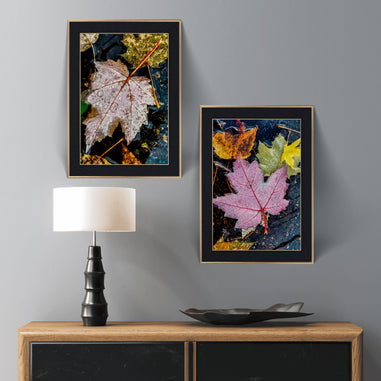
The key is authenticity. Look for photography that captures real seasonal overlap—not digitally manipulated scenes. Our Winter Snow-Kissed Autumn Leaves Collection captures exactly this moment: vibrant oranges, greens, and reds meeting pristine white snow.

Create a gallery wall that tells a seasonal story. Mix 2-3 transition pieces with complementary nature photography. The visual narrative keeps your space feeling dynamic rather than static.
Trend #2: Macro Winter Botanicals
Celebrating winter's intricate details
While traditional winter décor focuses on broad, snowy landscapes, 2026's trend leans into macro photography—extreme close-ups that reveal winter's hidden artistry.
Snow crystals on pine needles. Frost patterns on leaves. Ice formations on berries. These details are invisible to the casual observer but stunning when magnified and displayed at scale.
Why macro works:
Our brains are wired to notice patterns and textures. Macro photography engages this neurological response, creating visual interest that holds attention far longer than generic landscapes. In design terms, this translates to "stopping power"—the ability to make someone pause and truly look.
Where to use macro photography:
- Above beds or sofas: Large-scale macro prints (16×20" or larger) create dramatic focal points
- Narrow hallways: Vertical macro orientations work perfectly in challenging spaces
- Home offices: Detail-rich imagery enhances focus and reduces visual fatigue
- Reading nooks: Creates intimacy and contemplative atmosphere
Browse our complete winter macro photography collection to see how intricate details transform into wall-sized art.
Trend #3: Color Palettes Beyond Blue and White
Winter's secret rainbow
Traditional winter décor relies heavily on cool tones—icy blues, stark whites, silver metallics. But natural winter is far more colorful than we give it credit for.
2026's winter color trends include:
- Golden yellows: Late-autumn leaves persisting into winter
- Deep evergreens: Rich, saturated greens from conifers and winter foliage
- Burnt oranges and rusts: Dried grasses, seed pods, and tree bark
- Crimson reds: Winter berries, rose hips, and cardinal sightings
- Warm browns: Tree trunks, branches, and earth tones peeking through snow
These warm tones create what designers call "cozy contrast"—the juxtaposition of winter's cool reality with warm, inviting colors that make spaces feel comfortable rather than cold.
Implementation strategy
Start with a base of 2-3 neutral tones (whites, creams, soft grays), then introduce warm accent colors through nature photography. Our winter botanical prints provide instant color coordination—all images share complementary palettes, making gallery wall creation foolproof.
Complement your wall art with textiles in similar warm tones: rust-colored throw blankets, golden-yellow pillows, deep green accent chairs.
Trend #4: Unstretched Canvas for Personalization
The frame-it-yourself movement
One of 2026's most practical trends is the shift toward unstretched canvas prints—high-quality photographs printed on canvas but not pre-mounted on wooden stretcher bars.
Why this matters:
- Cost savings: Unstretched canvas costs 40-60% less than pre-stretched, gallery-wrapped options
- Customization: Choose your own frame style, color, and material to match existing décor
- Sustainability: Reduced shipping weight and packaging materials
- Flexibility: Easy to store, gift, or transport
The framing process is simple:
Take your unstretched canvas to any frame shop (Michaels, Hobby Lobby, local framers) or order standard-size frames online. Since our prints come in standard sizes (8×10", 9×12", 12×16", 14×18", 16×20"), you'll find countless affordable frame options.
Many customers love mixing frame styles within gallery walls—some with white mats, some with natural wood, some with black frames—creating curated, collected-over-time aesthetics rather than "bought as a set" looks.
Trend #5: Evidence of Authenticity
Why "real" matters in an AI-saturated world
As AI-generated imagery floods the market, consumers are actively seeking authenticity markers—proof that what they're buying is real photography of real places.
Interior designers report that clients specifically request:
- Photographer attribution and background
- Location details of where photographs were taken
- Behind-the-scenes content showing the photography process
- Small-batch or limited edition markers
- Support for women-owned or small businesses
This isn't just about aesthetics—it's about values. When you display authentic nature photography, you're supporting:
- Real artists and their craft
- Sustainable, eco-conscious production
- Small businesses over mass-market corporations
- Genuine connection with the natural world
Every photograph in The Virtue of God Brand collection is captured by me, Martha Solo, during actual nature walks and photography expeditions. No stock photos. No AI generation. Just real winter mornings, real frozen botanicals, and real moments preserved through skilled macro photography.
Read our story: https://www.thevirtueofgodbrand.com/pages/our-story
Trend #6: Four-Season Rotation Systems
Moving beyond "holiday seasonal"
2026 marks a significant shift: homeowners are moving away from holiday-specific décor (Christmas, Valentine's, Easter) toward seasonal décor that works for entire three-month periods.
The difference? Holiday décor is literal and temporary. Seasonal décor is atmospheric and lasting.
Winter seasonal décor includes:
- Frost and snow imagery (works December through February)
- Winter botanicals (berries, evergreens, bare branches)
- Cool-toned or transitional color palettes
- Nature-focused rather than celebration-focused imagery
This approach offers several advantages:
- Longer display periods: Decorate once for the entire season, not multiple times per holiday
- Reduced storage needs: Four seasonal rotations instead of 6-8 holiday rotations
- More sophisticated aesthetics: Nature-focused décor reads as "design choice" rather than "holiday decoration"
- Better investment value: Quality nature photography that displays for months justifies higher per-piece costs
Creating your rotation system:
Start with one season—winter, since we're in it now. Invest in 4-8 pieces of high-quality winter nature photography that you genuinely love. Display from December through February.
When Spring arrives (typically March-May), rotate in spring botanicals. Summer (June-August) showcases vibrant blooms and lush greenery. Fall (September-November) features golden foliage and harvest tones.
Store off-season pieces flat in a dry location, or create a "rotation gallery" where you keep all four seasons displayed in a less prominent area of your home, swapping them into prime viewing locations as seasons change.
Trend #7: Multi-Piece Sets for Visual Impact
Why gallery walls dominate 2026
Single, large-scale statement pieces are giving way to curated gallery walls—multiple coordinated pieces arranged together for maximum visual impact.
Gallery walls offer several design advantages:
Flexibility: Rearrange pieces to refresh your space without buying new art
Scalability: Start with 2-4 pieces, add more over time as budget allows
Visual interest: Multiple images create rhythm, pattern, and narrative
Space optimization: Fill large, awkward wall spaces that single pieces can't address
Conversation value: Each image becomes a talking point rather than single-focus attention
How to create gallery walls that work:
The biggest mistake people make is mixing too many unrelated styles, colors, or subjects. Professional designers recommend:
- Stick to one subject matter: All nature, all abstract, all portraits—not mixed
- Coordinate color palettes: Images should share 2-3 dominant colors
- Vary orientations: Mix vertical, horizontal, and square formats for dynamic arrangement
- Consistent framing: All frames should share similar style/color/material
- Intentional spacing: 2-4 inches between frames creates cohesion without crowding
Our 4-piece winter collections eliminate the guesswork—each set is pre-curated with coordinated colors, complementary compositions, and intentional variety in orientation and subject matter.

How to Shop for Winter Nature Photography
Questions to ask before buying
Not all nature photography is created equal. Before investing in winter décor, ask these questions:
1. Is this authentic photography or stock/AI-generated imagery?
Look for photographer attribution, location details, and behind-the-scenes content. Authentic photography carries value; generic stock does not.
2. What's the print quality and material?
Ask about:
- Ink type (archival/fade-resistant inks last decades)
- Canvas material (premium cotton canvas vs. synthetic)
- Print resolution (minimum 300 DPI for sharp, clear images)
- Finish options (matte reduces glare; glossy enhances colors)
3. What sizes are available?
Ensure the photography comes in sizes that fit your space and standard frame dimensions. Non-standard sizes significantly increase framing costs.
4. Is it stretched or unstretched?
As mentioned earlier, unstretched canvas offers more flexibility and cost savings—but only if you're comfortable with DIY or custom framing.
5. What's the return policy?
Quality sellers stand behind their products with clear return windows. We offer 30-day returns because we're confident you'll love what you receive.
6. Does it support values I care about?
Consider:
- Small business vs. mass-market corporation
- Women-owned or minority-owned businesses
- Eco-conscious production practices
- Local or domestic production vs. overseas manufacturing
Styling Tips: Making Winter Photography Work
Professional designer tricks
Layer with natural textures:
Winter nature photography works best when complemented by tactile natural materials:
- Chunky knit blankets
- Sheepskin or faux fur throws
- Natural wood furniture and accents
- Stone or ceramic decorative objects
- Linen or cotton textiles
The contrast between visual nature (photography) and tactile nature (textiles and materials) creates multi-sensory biophilic design.
Create intentional lighting:
Photography needs proper lighting to showcase detail and color. Layer three types of lighting:
- Ambient lighting: Overall room illumination (overhead fixtures, recessed lighting)
- Task lighting: Focused light for specific activities (reading lamps, desk lamps)
- Accent lighting: Directional light to highlight art (picture lights, track lighting, uplights)
Avoid direct sunlight on photography—it causes fading over time. Position art on walls perpendicular to windows rather than directly across from them.
Embrace negative space:
Don't overcrowd walls. In 2026, "more is more" gallery walls are being replaced by intentional spacing that lets each piece breathe.
The rule: If you can't see at least 6-12 inches of wall around your art, you've hung too much. Negative space gives your eye rest and makes each individual piece more impactful.
Coordinate with existing elements:
Pull colors from your photography into other room elements:
- If your winter photography features golden yellows, add yellow-toned throw pillows
- If greens are prominent, introduce live plants or green textiles
- If snow whites dominate, keep walls and larger furniture pieces neutral to let the art shine
This creates visual harmony—the space feels intentionally designed rather than randomly decorated.
Shopping Your Space: Where to Start
The room-by-room guide
Living Rooms & Family Rooms:
These high-traffic, multipurpose spaces benefit from larger-scale pieces or gallery walls that create focal points without overwhelming. Consider 2-4-piece sets in 12×16", 14×18", or16x20" sizes.

Best placement: Above sofas, fireplaces, or media consoles. Create visual weight that balances furniture below.
Bedrooms:
Private retreats call for calming, contemplative imagery. Winter photography's cool tones and serene subjects promote relaxation.

https://www.thevirtueofgodbrand.com/products/winter-tree-branches-blue-sky-moon-canvas-print
Best placement: Above bed (1-2 large pieces) or on wall opposite bed (gallery wall you see when lying down).
Home Offices:
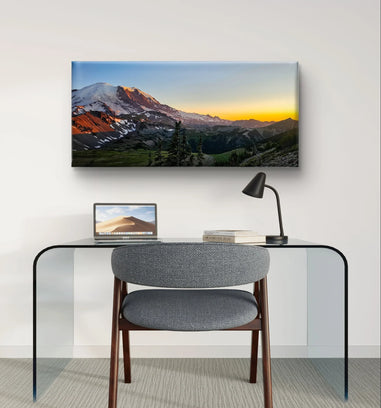
Biophilic design in work spaces reduces stress and enhances productivity. Choose detail-rich macro photography that holds interest without distraction.

https://www.thevirtueofgodbrand.com/products/winter-frost-foliage-canvas-print
Best placement: Behind desk (visible on video calls) or on wall opposite desk (in your sightline during breaks).
Hallways & Entryways:
Often-neglected spaces that benefit from vertical orientations in narrower formats.

https://www.thevirtueofgodbrand.com/products/winter-frosty-bushes-canvas-set
Best placement: Create gallery lines along hallway length, or make entryways memorable with a striking first impression.
Dining Rooms:
Seasonal rotation works beautifully here—winter photography December-February, spring March-May, and so on.

Best placement: Above sideboards, buffets, or on the largest uninterrupted wall.
Ready to transform your space? Explore our complete biophilic design collection or start with our curated winter photography sets.
The Investment Value of Quality Nature Photography
Why this décor choice pays dividends
Let's talk honestly about cost. Quality nature photography isn't the cheapest décor option. Mass-produced prints from big-box stores cost less upfront.
But here's what quality photography offers that cheap alternatives don't:
Longevity: Archival inks and premium canvas last 75-100+ years vs. 5-10 years for standard prints
Timelessness: Authentic nature photography never goes out of style; trendy graphic art dates quickly
Emotional value: Real photography creates genuine emotional connections that generic art cannot
Resale value: Limited edition or artist-signed photography often appreciates; mass-produced prints do not
Health benefits: Biophilic design's stress-reduction and mood-enhancement effects have measurable health value
Supporting artisans: Your purchase supports real photographers, small businesses, and sustainable practices
When you calculate cost-per-year of display, quality photography often costs less than repeatedly replacing cheap alternatives. A $200 investment that lasts 20+ years costs $10/year. A $40 print replaced every 3 years costs $13/year—and delivers far less aesthetic and emotional value.
For many customers, nature photography also becomes a collection they build over time—rotating pieces seasonally, adding to gallery walls gradually, even passing down to children as family heirlooms.
Sustainability in Winter Décor
Making eco-conscious choices
As biophilic design celebrates nature, it makes sense that practitioners care about environmental impact. Here's how to make winter décor more sustainable:
Choose quality over quantity
One high-quality piece that lasts decades beats five cheap pieces replaced every few years. Reduce consumption by investing in longevity.
Opt for eco-conscious materials
Ask sellers about:
- Sustainably sourced canvas materials
- Water-based or eco-solvent inks (vs. harsh chemical inks)
- Minimal packaging with recyclable materials
- Carbon-neutral or offset shipping options
At The Virtue of God Brand, we prioritize eco-conscious printing and packaging because art that celebrates nature should never harm it.
Select unstretched canvas
Beyond cost savings, unstretched canvas reduces:
- Shipping weight (smaller carbon footprint)
- Packaging materials (no bulky stretcher bar protection needed)
- Warehouse storage space (more efficient inventory management)
Support small, local businesses when possible
Shorter supply chains mean smaller environmental impact. When you buy from small businesses producing domestically, you typically reduce:
- International shipping emissions
- Warehouse-to-warehouse transfers
- Mass production waste
Create rotation systems
Rather than buying new décor for every holiday and season, invest in four seasonal collections you rotate through. This reduces:
- Total consumption
- Storage needs
- Waste when items go out of style
You can also shop our nature photography on Amazon for free shipping options, though purchasing directly from our website often offers more personalization and supports our small business more directly.
Beyond the Walls: Extending Winter Décor
Creating cohesive seasonal aesthetics
Winter décor shouldn't stop at wall art. To create truly immersive biophilic spaces, extend nature-focused design throughout your room:
Bring in natural elements:
- Branches and twigs in tall vases (spray with clear sealant to preserve)
- Pine cones in bowls or glass hurricanes
- Dried grasses and seed pods
- Evergreen clippings (replace weekly for freshness)
- River rocks or smooth stones
Add winter-appropriate plants:
- Amaryllis bulbs (dramatic indoor winter blooms)
- Paperwhites (fragrant, easy to force indoors)
- Evergreen succulents (year-round easy-care greenery)
- Air plants in geometric holders
- Herbs like rosemary shaped into topiaries
Layer winter textiles:
- Chunky cable-knit blankets
- Faux fur or sheepskin throws
- Wool or felt pillows
- Heavy linen curtains
- Natural fiber area rugs (jute, sisal, wool)
Incorporate natural scents:
- Beeswax candles (naturally purify air)
- Essential oil diffusers with pine, cedar, or eucalyptus
- Simmer pots with cinnamon sticks, orange peels, cloves
- Fresh evergreen garlands (the real scent can't be replicated)
Create winter vignettes:
On coffee tables, side tables, mantels, and shelves, arrange small groupings:
- Stack of nature photography books
- Natural object (pine cone, interesting branch, stone)
- Candle in neutral holder
- Small plant or fresh greenery
These vignettes echo the natural themes in your wall art, creating visual continuity throughout the space.
Preparing for Spring Transition
Planning ahead for seamless seasonal rotation
While we're deep in winter now, smart decorators are already thinking ahead to spring. Here's how to plan for smooth seasonal transitions:
Take photos of your winter setup
Before you take down winter décor in March, photograph:
- Gallery wall arrangements (so you can recreate them next year)
- Furniture placement that worked well with winter pieces
- Styling details you want to remember
Store these photos in a "Seasonal Décor" album on your phone for reference.
Create a rotation storage system
Invest in:
- Flat, archival-quality storage boxes for prints
- Labels for each season
- Climate-controlled storage space (avoid attics/basements with extreme temperatures)
- Acid-free tissue paper to protect prints
Plan your spring refresh now
Browse spring collections while winter pieces are still up. Consider:
- What color palettes would complement your existing furniture and fabrics?
- Which rooms need refreshing most urgently?
- What sizes worked best in your winter arrangements?
Many customers purchase spring pieces in January-February (during winter sales) to have them ready when March arrives.
Consider year-round pieces
Some nature photography works across multiple seasons. Neutral-toned botanicals, evergreens, and abstract macro textures can stay up year-round, with a few seasonal accent pieces rotated in and out around them.
This approach reduces the amount of storage needed and creates visual continuity throughout the year.
Final Thoughts: The Power of Authentic Connection
Winter décor trends come and go. Coastal grandmother, maximalist jungle, modern farmhouse—each year brings new aesthetic movements.
But the fundamental human need to connect with nature? That's timeless.
The 2026 trend toward biophilic winter design isn't just about what looks good (though authentic nature photography absolutely does). It's about what feels good. What reduces stress. What grounds us during long, dark winter months. What reminds us that even in dormancy, nature is breathtakingly beautiful.
When you bring authentic winter nature photography into your home, you're not just decorating. You're:
- Creating a daily reminder of the natural world's artistry
- Supporting real artists and small businesses
- Investing in your mental health and wellbeing
- Building a home that reflects your values
- Establishing traditions of seasonal connection
And perhaps most importantly, you're surrounding yourself with real moments—not AI-generated approximations or stock photo placeholders, but actual frozen mornings, actual snow-kissed leaves, actual winter light captured through a real photographer's lens.
That authenticity matters. Your brain knows the difference, even if you can't consciously articulate why one piece of nature photography moves you while another leaves you indifferent.
As winter deepens here in January 2026, I encourage you to look around your space. Does it feel connected to the season outside? Does it celebrate winter's unique beauty, or does it merely tolerate winter while waiting for spring?
Your walls are some of the most valuable real estate in your home. What you choose to display there shapes your daily experience, your mood, your sense of peace.
Choose wisely. Choose authentically. Choose nature.
Ready to Transform Your Winter Space?
Shop The Virtue of God Brand Photography Art
🍂 Winter Snow-Kissed Autumn Leaves Collection – Seasonal transition magic
❄️ Complete Winter Frozen Collection – All winter nature images
🌿 Biophilic Design Collections – Year-round nature connection
🛒 Shop on Amazon – Free shipping available
Connect With Us
📸 Instagram – Behind-the-scenes photography + seasonal inspiration
👥 Facebook – Décor tips + customer features
📌 Pinterest – Gallery wall ideas + seasonal boards
Related Articles You Might Love:
- How to Create Gallery Walls That Actually Work
- The Science Behind Biophilic Design: Why Nature Photography Reduces Stress
- Behind the Lens: A Day in the Life of a Winter Nature Photographer
Enjoyed this article? Share it with fellow nature lovers and home décor enthusiasts! Use the share buttons below.