
Biophilic Design 101: How to Bring Nature Indoors for Better Health & Well-Being
Have you ever noticed how much better you feel after a walk in the forest? Or how a room with plants and natural light just feels more inviting than a sterile, windowless office?
There's actual science behind that feeling—and it's called biophilic design.
If you've been searching for ways to make your home feel more calming, inspiring, and connected to nature, you're in the right place. In this guide, we'll break down exactly what biophilic design is, why it matters for your health and happiness, and how you can easily incorporate it into your space—even if you live in a city apartment with no backyard.
Let's dive in! 🌿
What Is Biophilic Design?
Biophilic design is an approach to architecture and interior design that connects people with nature through the built environment. The term comes from "biophilia," which literally means "love of life" or "love of living things."
In simple terms: Biophilic design brings the outdoors inside.
This can include:
🌱 Living elements (plants, green walls, water features)
☀️ Natural light (large windows, skylights, light wells)
🪨 Natural materials (wood, stone, bamboo, cork)
🎨 Nature-inspired colors (earth tones, greens, blues)
🖼️ Nature imagery (landscape photography, botanical prints, nature art)
🌊 Natural patterns (organic shapes, fractals, flowing lines)
The goal? To create spaces that reduce stress, improve mood, boost creativity, and enhance overall well-being by reconnecting us with the natural world.

Why Biophilic Design Matters: The Science-Backed Benefits
Biophilic design isn't just a trendy aesthetic—it's backed by decades of research showing real, measurable benefits for mental and physical health.
1. Reduces Stress & Anxiety
Studies show that exposure to nature—even through images or indoor plants—lowers cortisol (the stress hormone) and reduces anxiety levels.
Research highlight: A 2019 study published in Frontiers in Psychology found that just 20 minutes in a natural setting significantly reduced stress hormone levels.
2. Improves Focus & Productivity
Natural elements in workspaces improve concentration, creativity, and cognitive function.
Research highlight: The Human Spaces Report found that employees in offices with natural elements reported a 15% increase in well-being and a 6% increase in productivity.
3. Boosts Mood & Mental Health
Nature exposure increases serotonin and dopamine—the "feel-good" neurotransmitters—leading to improved mood and reduced symptoms of depression.
Research highlight: A study in Environmental Health Perspectives found that people living in greener neighborhoods had lower rates of depression and anxiety.
4. Speeds Up Recovery & Healing
Hospital patients with views of nature recover faster and require less pain medication than those without.
Research highlight: The famous 1984 study by Roger Ulrich found that surgery patients with a view of trees recovered 8.5% faster than those facing a brick wall.
5. Enhances Creativity & Problem-Solving
Natural environments and nature-inspired spaces improve creative thinking and problem-solving abilities.
Research highlight: A 2012 study in PLOS ONE found that spending time in nature improved creative problem-solving by 50%.
6. Improves Air Quality & Physical Health
Indoor plants filter toxins, increase oxygen, and improve air quality—leading to better respiratory health and fewer sick days.
Research highlight: NASA's Clean Air Study identified several houseplants that effectively remove indoor air pollutants.

The 14 Patterns of Biophilic Design
Biophilic design expert Stephen Kellert identified 14 patterns that connect humans with nature. You don't need to incorporate all of them—even a few can make a big difference!
Direct Experience of Nature:
- Visual Connection with Nature – Views of plants, water, animals, or landscapes
- Non-Visual Connection with Nature – Sounds, scents, and textures from nature
- Non-Rhythmic Sensory Stimuli – Unpredictable natural movements (like leaves rustling)
- Thermal & Airflow Variability – Natural temperature changes and fresh air
- Presence of Water – Fountains, aquariums, or water features
- Dynamic & Diffuse Light – Natural light that changes throughout the day
- Connection with Natural Systems – Awareness of seasonal and temporal changes
Indirect Experience of Nature:
- Biomorphic Forms & Patterns – Organic, nature-inspired shapes
- Material Connection with Nature – Wood, stone, leather, natural fibers
- Complexity & Order – Rich sensory information with a sense of order (like fractals)
Experience of Space & Place:
- Prospect – Unobstructed views and sense of openness
- Refuge – Cozy, protected spaces that feel safe
- Mystery – Partially obscured views that invite exploration
- Risk/Peril – Controlled sense of danger (like a balcony with a view)
For most homes, focus on patterns 1, 6, 8, and 9—these are the easiest and most impactful!
10 Easy Ways to Incorporate Biophilic Design Into Your Home
You don't need a complete renovation or a huge budget to bring biophilic design into your space. Here are 10 simple, actionable ways to get started today:
1. Maximize Natural Light
Why it works: Natural light regulates circadian rhythms, improves mood, and boosts vitamin D production.
How to do it:
- Open curtains and blinds during the day
- Use sheer curtains instead of heavy drapes
- Place mirrors opposite windows to reflect light
- Choose light, neutral wall colors to brighten rooms
- Remove obstacles blocking windows
Pro tip: If you have limited natural light, use full-spectrum LED bulbs that mimic daylight.
2. Add Indoor Plants (Lots of Them!)
Why it works: Plants improve air quality, reduce stress, and create a living connection to nature.
How to do it:
- Start with easy, low-maintenance plants (pothos, snake plant, ZZ plant)
- Group plants in clusters for visual impact
- Use plants of varying heights and textures
- Place plants in every room (yes, even the bathroom!)
- Consider a living wall or vertical garden for dramatic effect
Pro tip: If you travel often or forget to water, choose drought-tolerant plants like succulents or cacti.
Shop our Nature Photography to complement your plant collection with botanical wall art!
3. Use Natural Materials
Why it works: Natural materials provide tactile connection to nature and create warmth and authenticity.
How to do it:
- Choose wood furniture over plastic or metal
- Add stone or marble accents (countertops, coasters, trays)
- Use natural fiber textiles (cotton, linen, wool, jute)
- Incorporate bamboo, rattan, or wicker pieces
- Display natural objects (driftwood, shells, stones, pinecones)
Pro tip: Mix textures—smooth wood with rough stone, soft linen with woven jute—for sensory richness.
4. Bring in Nature-Inspired Colors
Why it works: Earth tones and natural colors create a calming, grounding atmosphere.
How to do it:
- Use a neutral base (beige, cream, soft gray, warm white)
- Add accent colors from nature (forest green, sky blue, terracotta, sage)
- Avoid overly bright or artificial colors
- Look to your favorite natural landscapes for color inspiration
- Use the 60-30-10 rule (60% dominant color, 30% secondary, 10% accent)
Pro tip: Our Winter Frozen Collection features serene blues, whites, and earth tones perfect for biophilic spaces.
5. Display Nature Photography & Art
Why it works: Nature imagery provides visual connection to the outdoors and triggers the same stress-reducing benefits as real nature.
How to do it:
- Choose large-scale landscape or macro nature photography
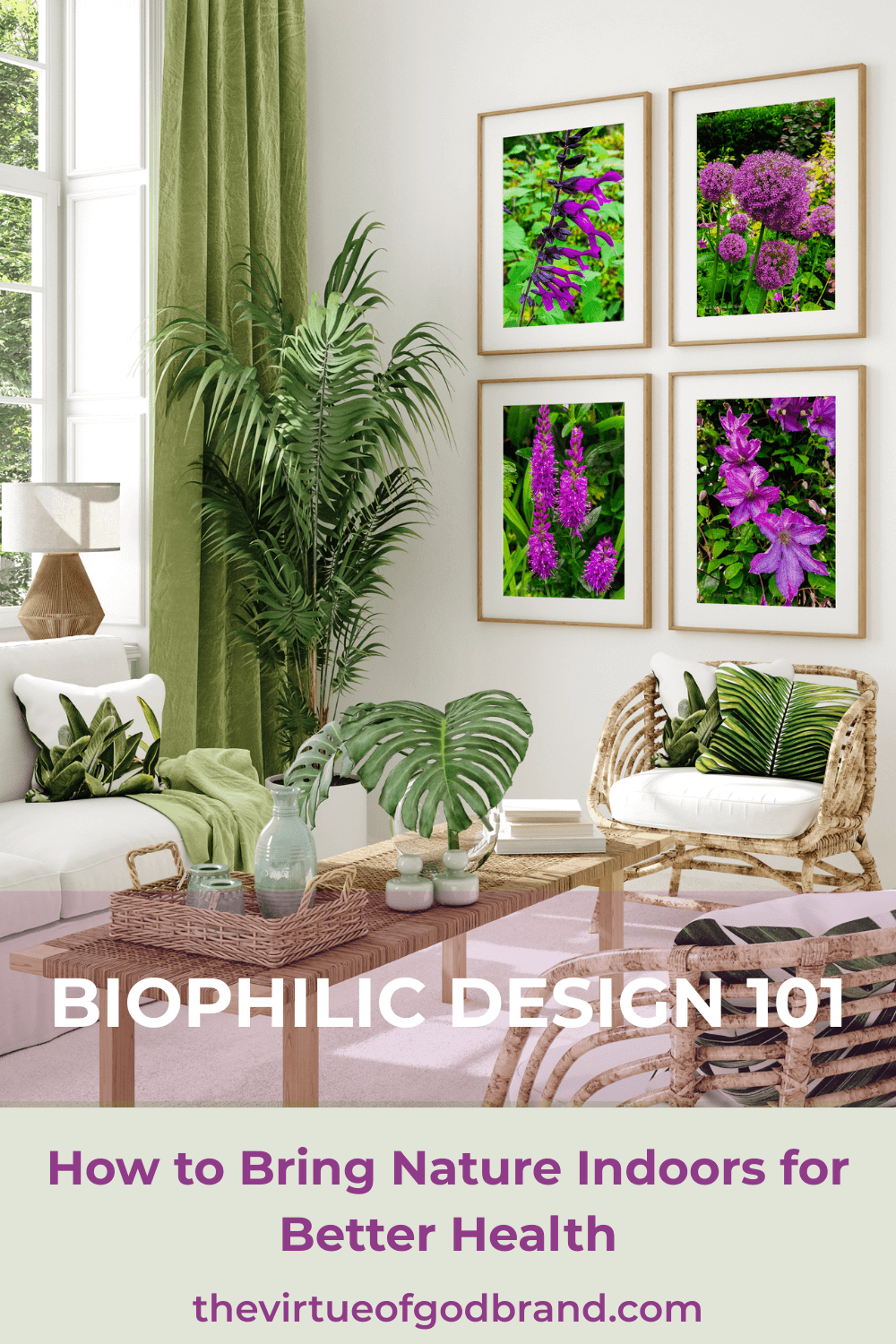
- Create a gallery wall with botanical prints or forest scenes
- Select images that evoke the feeling you want (calm, energized, inspired)
- Use natural wood or simple frames
- Place nature art in high-traffic areas (living room, bedroom, home office)
Pro tip: Studies show that images of nature with depth and complexity (like forests or mountains) are most effective for stress reduction.

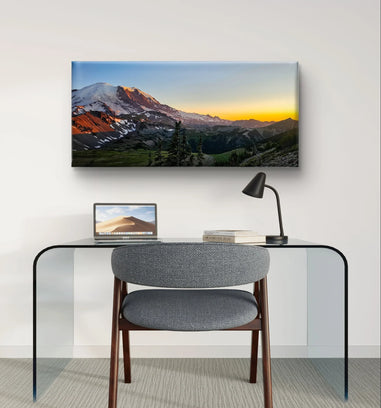
Browse our Summer Brilliance Collections– shot on location in Mt. Rainier, Olympic, and North Cascades National Parks.
6. Incorporate Water Features
Why it works: The sound of water is inherently calming and masks distracting noises.
How to do it:
- Add a small tabletop fountain
- Install a wall-mounted water feature
- Place an aquarium in your living room or office
- Use a humidifier with a water sound feature
- Display images of waterfalls, lakes, or ocean scenes
Pro tip: Even a simple bowl of water with floating flowers can create a sense of tranquility.
7. Create Views & Sight-lines
Why it works: Unobstructed views create a sense of openness and connection to the outdoors.
How to do it:
- Arrange furniture to face windows or nature views
- Use glass doors or large windows to blur indoor/outdoor boundaries
- Create "borrowed views" with strategically placed mirrors
- Frame outdoor views with indoor plants
- Keep window areas clutter-free
Pro tip: If you don't have a nature view, create one with a large-scale nature photograph or mural.
Shop Large Framed/Wrapped Canvas Prints (24x36" to 40x60") to create your own "window to nature."
8. Use Organic Shapes & Patterns
Why it works: Curved, flowing lines mimic natural forms and feel more comfortable than harsh angles.
How to do it:
- Choose furniture with rounded edges
- Add circular or oval mirrors
- Use organic, asymmetrical arrangements (not perfectly symmetrical)
- Incorporate natural patterns (wood grain, stone veining, leaf shapes)
- Avoid overly geometric or industrial designs
Pro tip: Look for fractals—repeating patterns found in nature (like ferns or tree branches)—in textiles and art.
9. Improve Air Quality
Why it works: Fresh, clean air is essential for health and well-being.
How to do it:
- Open windows regularly for fresh air circulation
- Use air-purifying plants (spider plant, peace lily, Boston fern)
- Invest in a HEPA air purifier
- Avoid synthetic fragrances (use essential oils instead)
- Reduce indoor pollutants (VOCs from paint, cleaning products)
Pro tip: NASA recommends 1 plant per 100 square feet for optimal air purification.
10. Connect with Seasonal Changes
Why it works: Awareness of natural cycles keeps us connected to the rhythms of nature.
How to do it:
- Rotate decor seasonally (spring florals, autumn leaves, winter branches)
- Display seasonal nature photography
- Bring in seasonal natural elements (pinecones in winter, flowers in spring)
- Adjust lighting to match seasonal daylight patterns
- Celebrate seasonal holidays with natural decorations
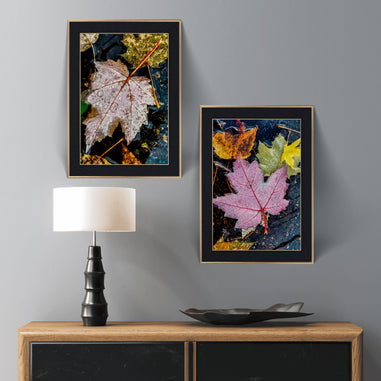
Pro tip: Our Festive Autumn Collection features vibrant rain-kissed leaves, while our For Rose Lovers Collection captures delicate rose blossoms beauty—perfect for seasonal rotation!
Biophilic Design for Different Rooms
Living Room
Focus: Relaxation, connection, conversation
Biophilic elements:
- Large nature photography above the sofa
- Potted plants in corners and on shelves
- Natural wood coffee table
- Soft, natural fiber throw blankets
- Large windows with sheer curtains

Shop Living Room Wall Art – Gallery wall sets and large statement pieces
Bedroom
Focus: Rest, calm, rejuvenation
Biophilic elements:
- Calming nature photography (forests, water, mountains)
- Blackout curtains that open fully during the day
- Natural linen bedding
- Small plants on nightstands
- Soft, diffused lighting
Pro tip: Choose nature images in cool tones (blues, greens) for better sleep.

Shop Bedroom Wall Art – Serene winter landscapes perfect for restful spaces
Home Office
Focus: Productivity, creativity, focus
Biophilic elements:
- Desk facing a window or nature view
- Multiple plants (especially air-purifying varieties)
- Natural wood desk and shelving
- Nature photography with depth and complexity
- Full-spectrum task lighting

Research shows: Biophilic design in offices increases productivity by 6-15%!
Kitchen
Focus: Nourishment, gathering, energy
Biophilic elements:
- Herb garden on windowsill
- Natural wood cutting boards and utensils
- Stone or wood countertops
- Large windows with natural light
- Nature-inspired color palette (greens, earth tones)
Bathroom
Focus: Cleansing, renewal, spa-like retreat
Biophilic elements:
- Humidity-loving plants (ferns, orchids, air plants)
- Natural stone or wood accents
- Nature photography (waterfalls, forests, ocean)
- Natural fiber towels and bath mats
- Soft, warm lighting
Pro tip: Bathrooms are perfect for tropical plants that love humidity!
Common Biophilic Design Mistakes to Avoid
❌ Mistake #1: Fake Plants
Why it's a problem: Fake plants don't provide the air quality, sensory, or psychological benefits of real plants.
Better solution: Choose low-maintenance real plants (snake plant, pothos, ZZ plant) or use nature photography instead.
❌ Mistake #2: Too Much Clutter
Why it's a problem: Biophilic design requires visual clarity and order—clutter creates stress, not calm.
Better solution: Edit ruthlessly. Keep surfaces clear and use natural storage solutions (woven baskets, wood boxes).
❌ Mistake #3: Ignoring Natural Light
Why it's a problem: Natural light is the #1 most important element of biophilic design.
Better solution: Prioritize window access. If natural light is limited, use full-spectrum bulbs and mirrors to maximize what you have.
❌ Mistake #4: Using Only One Element
Why it's a problem: Biophilic design works best when multiple elements work together.
Better solution: Layer elements—combine plants + natural light + nature art + natural materials for maximum impact.
❌ Mistake #5: Choosing Generic Nature Art
Why it's a problem: Mass-produced, generic nature posters lack authenticity and emotional connection.
Better solution: Choose authentic nature photography shot on location—images with a story and real connection to place.
Browse our authentic nature photography – every image is shot on location in Pacific Northwest national parks.
Biophilic Design on a Budget
You don't need to spend thousands to create a biophilic space! Here are budget-friendly ideas:
Under $50:
✅ Add 3-5 houseplants ($10-15 each)
✅ Open curtains and rearrange furniture to maximize natural light (free!)
✅ Collect natural objects on walks (pinecones, stones, driftwood) (free!)
✅ Print nature photography from your own travels ($5-20)
✅ Use natural fiber thrift store finds (baskets, linens) ($10-30)
Under $200:
✅ Invest in 1-2 large houseplants ($30-60 each)
✅ Purchase authentic nature photography canvas prints ($50-150)
✅ Add a small tabletop water fountain ($30-50)
✅ Buy natural wood shelving or furniture (thrift/secondhand) ($50-100)
Under $500:
✅ Create a gallery wall with 5-7 nature prints ($200-350)
✅ Install full-spectrum lighting ($50-100)
✅ Add a living wall or large vertical garden ($100-200)
✅ Upgrade to natural fiber textiles (rugs, curtains, bedding) ($100-150)

Shop our canvas prints starting at just $19.85 for 8x10" – affordable biophilic design for every budget!
Biophilic Design FAQs
Q: Do I need a lot of space for biophilic design?
A: No! Even small apartments can incorporate biophilic elements. Focus on:
- Small potted plants on shelves and windowsills
- One large nature photograph as a focal point
- Natural light maximization
- Natural materials in furniture and textiles
Small spaces can feel bigger with biophilic design—natural light and views create a sense of openness.
Q: What if I don't have a green thumb?
A: Choose low-maintenance plants that thrive on neglect:
- Snake plant (water every 2-3 weeks)
- Pothos (tolerates low light, water weekly)
- ZZ plant (water every 2-3 weeks)
- Succulents (water every 2 weeks)
Or focus on other biophilic elements like natural light, materials, and nature photography!
Q: Can nature photography really replace real nature?
A: While nothing fully replaces time outdoors, research shows that nature imagery provides similar stress-reducing benefits—especially when the images are:
- Large-scale (12x16" or bigger)
- High-quality and detailed
- Authentic (real locations, not AI or stock photos)
- Personally meaningful
Our nature photography is shot on location in Mt. Rainier, Olympic, and North Cascades National Parks—bringing authentic Pacific Northwest wilderness into your home.
Q: What's the best type of nature art for biophilic design?
A: Research suggests:
- Landscapes with depth (forests, mountains, meadows)
- Water scenes (lakes, waterfalls, ocean)
- Macro nature photography (flowers, leaves, frost)
- Images with complexity (rich detail and layers)
Avoid: Abstract nature art or overly simplified graphics—they don't trigger the same biophilic response.
Q: How many plants do I need?
A: NASA recommends 1 plant per 100 square feet for air purification benefits.
For a typical home:
- Studio/1BR (500-700 sq ft): 5-7 plants
- 2BR (800-1200 sq ft): 8-12 plants
- 3BR (1200-1800 sq ft): 12-18 plants
Start small and add more as you get comfortable with plant care!
Q: Does biophilic design work in modern/minimalist spaces?
A: Absolutely! Biophilic design complements minimalism beautifully:
- Use clean-lined furniture in natural wood
- Choose simple, unframed canvas prints
- Select plants with architectural shapes (snake plant, fiddle leaf fig)
- Stick to a neutral, nature-inspired color palette
- Focus on quality over quantity
Minimalism + biophilia = calm, uncluttered spaces with natural warmth.
Q: Can I mix biophilic design with other styles?
A: Yes! Biophilic design works with any style:
- Modern: Clean lines + natural materials + large nature photography
- Bohemian: Lots of plants + natural textiles + eclectic nature art
- Scandinavian: Light wood + white walls + simple nature prints
- Industrial: Exposed brick + metal + greenery + reclaimed wood
- Traditional: Classic furniture + botanical prints + natural fabrics
Biophilic design is a philosophy, not a style—it adapts to your aesthetic!
Ready to Transform Your Space with Biophilic Design?
Now that you understand the science, benefits, and practical strategies behind biophilic design, it's time to bring nature into your home!
Remember, you don't need to do everything at once. Start with one or two elements that resonate with you:
✅ Add a few plants to your living room
✅ Maximize natural light by opening curtains and rearranging furniture
✅ Hang nature photography that inspires and calms you
✅ Incorporate natural materials in furniture and textiles
✅ Create a seasonal rotation to stay connected to nature's rhythms
Even small changes can have a big impact on your mood, stress levels, and overall well-being.
Shop Authentic Nature Photography for Your Biophilic Space
Our nature photography is specifically designed to support biophilic design principles:
✅ Authentic & Location-Specific – Shot on Pacific Northwest location in Mt. Rainier, Olympic, and North Cascades National Parks
✅ High Detail & Complexity – Rich, layered images that engage the eye and mind
✅ Calming & Inspiring – Carefully composed to evoke peace, wonder, and connection
✅ Premium Quality – Museum-grade canvas with vibrant, fade-resistant inks
✅ 22 Size Options – From 6x8" to 40x60" to fit any space
✅ Unframed & Framed Available – Ready to hang or customize to your style
Shop by Collection:

Vibrant flowers, lush greenery, and sun-drenched landscapes that bring energy and life to any space. Perfect for living rooms, kitchens, and creative workspaces.
Best for: Boosting mood, enhancing creativity, adding vibrant color
Featured: Roses, wildflowers, alpine meadows, forest, mountains, and lakes scenes

Serene frost-covered landscapes and delicate ice formations that create a calming, meditative atmosphere. Ideal for bedrooms, meditation spaces, and offices.
Best for: Stress reduction, promoting calm, creating peaceful environments
Featured: Frosted leaves, golden winter trees, snow-covered branches
 Kissed by Rain Collection
Water droplets, rain-soaked foliage, flowers, and bushes that incorporate the biophilic element of water. Perfect for bathrooms, entryways, and spa-like spaces.
Best for: Incorporating water elements, creating tranquility, connecting with natural cycles
Featured: Raindrops on leaves, wet branches, water-kissed flowers
 Macro Photography Collection
Intimate close-ups of nature's intricate details—from flower petals to frost patterns. These images invite contemplation and reveal the hidden beauty of the natural world.
Best for: Small spaces, creating focal points, encouraging mindfulness
Featured: Extreme close-ups, textures, patterns, natural details
 Spring Magic Collection
Fresh blooms, new growth, and the vibrant energy of spring. Brings renewal and optimism to any room.
Best for: Seasonal connection, uplifting mood, celebrating growth
Featured: Spring flowers, fresh foliage, awakening landscapes
 Festive Autumn Collection
Warm & vibrant autumn colors, golden leaves, and harvest scenes that connect your space with seasonal rhythms—a key principle of biophilic design.
Best for: Seasonal connection, warm color palettes, cozy atmospheres
Featured: Fall foliage, autumn landscapes, golden hour scenes
 For Rose Lovers Collection
Dedicated to the timeless beauty of roses in all their forms—from delicate buds to full blooms. Perfect for romantic, elegant spaces.
Best for: Bedrooms, dining rooms, creating romantic atmospheres
Featured: Rose close-ups, rose gardens, various rose varieties
 Framed Canvas Collection
Ready-to-hang framed canvas prints in 16 sizes. No additional framing needed—just unbox and display.
Best for: Quick setup, polished look, gift-giving
Available in: 16 sizes from 8×10" to 40×60"
💝 Not sure where to start?
Shop All Collections or Give a Gift Card so your loved ones can choose their perfect biophilic design piece.
Popular Sizes for Biophilic Design:
Small Spaces (Apartments, Bedrooms):
👉 Shop 12x16" Prints – Perfect for gallery walls and smaller rooms
Medium Spaces (Living Rooms, Offices):
👉 Shop 16x20" Prints – Ideal statement pieces above sofas and desks
Large Spaces (Open Concept, High Ceilings):
👉 Shop 24x36" to 30x60" Prints – Dramatic focal points that command attention
📏 Need help choosing the right size?
Read our Complete Canvas Print Size Guide for room-by-room recommendations.
Why Choose The Virtue of God?
✅ Authentic Nature Photography – Every image tells a story from the Pacific Northwest wilderness
✅ Premium Canvas Quality – Museum-grade materials that last for decades
✅ Free Shipping – On all orders over $35
✅ 30-Day Returns – Love it or return it, no questions asked
✅ Eco-Conscious – Sustainable materials and responsible production
✅ Small Business – Supporting us supports authentic, independent nature photography
Prefer Amazon?
We also sell on Amazon with free shipping.
Shop The Virtue of God on Amazon
Keep Learning About Biophilic Design & Nature in Your Home
📖 The Complete Canvas Print Size Guide – Choose the perfect sizes for your biophilic space
📖 How to Create a Stunning Gallery Wall – Step-by-step guide to designing nature-inspired gallery walls
📖 Winter Canvas Print FAQ – Everything you need to know before you buy
📖 Behind the Lens: Our Photography Process – See how we capture authentic nature photography
More Biophilic Design Resources
Want to dive deeper? Check out these expert resources:
📚 Books:
- Biophilic Design by Stephen Kellert
- The Nature Fix by Florence Williams
- Last Child in the Woods by Richard Louv
🌐 Organizations:
📄 Research:
- 14 Patterns of Biophilic Design by Terrapin Bright Green
- Human Spaces Report by Interface
Share Your Biophilic Space!
We'd love to see how you've incorporated nature into your home! Tag us on social media:
📷 Instagram: @thevirtueofgodbrand
📌 Pinterest: The Virtue of God Nature Photography
📘 Facebook: The Virtue of God
Use hashtag #TheVirtueOfGodBiophilic for a chance to be featured!
Questions about biophilic design or choosing the right nature photography for your space?
Contact us – We're here to help you create your perfect biophilic sanctuary! 🌿
Happy designing! May your space be filled with nature's beauty and peace. 🌲✨